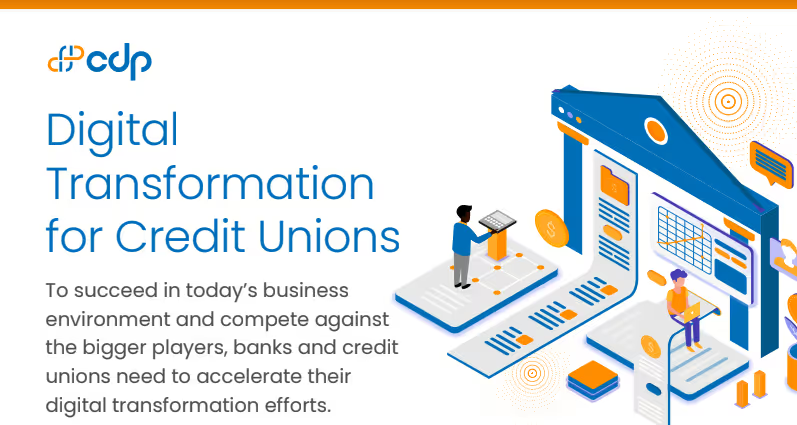
[Infographic] Digital Transformation for Credit Unions
Read More


In today's digital era, safeguarding financial transactions is paramount for businesses of all sizes. The shift from paper-based transactions to digital ones has brought convenience but also increased the risk of data breaches and fraud. To mitigate these risks, businesses are increasingly turning to bank account details form templates and ACH form templates. These tools not only facilitate smooth financial operations but also enhance the security of sensitive financial data.
ACH form templates, or Automated Clearing House form templates, are crucial for modern business transactions. They allow for the secure transfer of funds through automated clearinghouses, reducing reliance on manual check payments. This transition has not only minimized paper usage but also streamlined the process of sending and receiving money. By adhering to ACH rules and regulations, these templates ensure that all necessary bank account information is collected in a structured and secure manner.
Bank account details form templates play a vital role in capturing essential account information needed for transactions. They are particularly beneficial for businesses that handle recurring transactions, as they save time and reduce errors. These templates are designed to gather all necessary details without compromising security, ensuring that sensitive information is handled professionally. Customization options allow businesses to add security questions or unique identifiers, further reducing the risk of fraud.
While ACH form templates and bank account details form templates are effective tools for secure transactions, coupling them with encryption technologies can provide an additional layer of protection. Encrypted data makes it difficult for unauthorized individuals to access sensitive information, thereby reducing the potential for fraudulent activities. This combination of templates and encryption is essential for maintaining the integrity of financial transactions in a digital age.
To successfully integrate ACH form templates into your business operations, it is crucial to ensure they align with current ACH rules and regulations. This involves designing templates that clearly and accurately collect all necessary bank account information. Additionally, businesses should stay informed about the latest safety protocols and encryption technologies to prevent misuse and breaches of client trust. By strategically employing these tools, businesses can achieve greater efficiency and security in their financial transactions.
In conclusion, utilizing bank account details form templates and ACH form templates is an effective strategy for streamlining secure transactions in a digital age. These tools simplify the complex task of handling financial transactions while protecting sensitive client information from potential security threats. However, their effectiveness depends on proper use and management, as well as awareness of the latest safety protocols and encryption technologies. By adopting this strategic approach, businesses can enhance their financial security and build trust with their clients.
What are ACH form templates?
ACH form templates are standardized forms used to facilitate secure fund transfers through automated clearinghouses, reducing the need for manual check payments.
How do bank account details form templates enhance security?
These templates ensure that all necessary account information is collected in a secure and organized manner, reducing errors and the risk of unauthorized transactions.
Why is encryption important in financial transactions?
Encryption adds an extra layer of security by making it difficult for unauthorized individuals to access sensitive information, thus preventing fraud.
Can ACH form templates be customized?
Yes, businesses can customize these templates to include security questions or unique identifiers, enhancing their security features.
What should businesses consider when implementing ACH form templates?
Businesses should ensure their templates comply with ACH rules and regulations and stay updated on the latest security protocols and encryption technologies.
.avif)