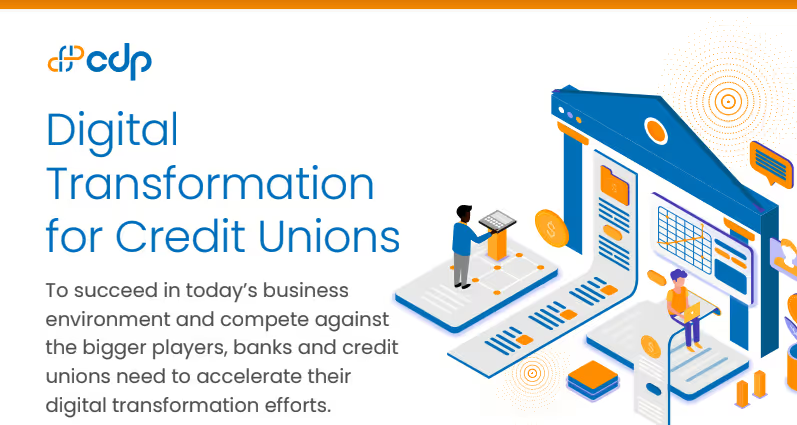
[Infographic] Digital Transformation for Credit Unions
Read More


In an age where digital transformation is reshaping industries and data is constantly moving across global networks, ensuring information security has become more critical than ever. Enter electronic signatures, or eSignatures, which stand as a cornerstone in the realm of digital certifying services. Offering both versatility and security, eSignatures are becoming indispensable in our fast-paced, digitally driven world. This article explores the intricacies of how eSignatures contribute to heightened security in the electronic era.
eSignature technology facilitates the digital signing and verification of electronic documents. Legally recognized in regions like the European Union and the United States, eSignatures demonstrate immense potential across various fields, including banking, real estate, healthcare, and law. This legal recognition underscores the credibility and widespread applicability of eSignatures in numerous professional domains.
At their core, eSignatures are designed to provide high-level security for digital transactions. They employ robust encryption technologies to safeguard the contents of a document and the signature itself from unauthorized access and tampering. Additionally, eSignatures offer traceability by recording the signer's IP address, device ID, and timestamp of the transaction, thus assuring the authenticity of the electronic document. This comprehensive security framework makes eSignatures a trusted tool for secure digital transactions.
One of the most powerful features of eSignatures is their enhanced authentication mechanism. Before allowing individuals to sign a document, user identity verification can be performed through various means such as email, SMS, social media profiles, and biometric verification. This rigorous authentication process bolsters security measures and adds an additional layer of protection against fraudulent activities, ensuring that only authorized individuals can access and sign sensitive documents.
eSignatures not only offer ease of use but also ensure compliance with global and industry-specific regulations like the ESIGN Act in the U.S., eIDAS in the European Union, and PIPEDA in Canada. These guidelines mandate stringent security measures for electronic signatures, ensuring due legal process, security, and integrity of the eSignatures. By adhering to these regulations, businesses can confidently use eSignatures, knowing they meet the required legal standards.
From digitally signing contracts to filing taxes online, eSignatures are transforming various industries by providing convenience, speed, and high security. In fields where sensitive information exchange is frequent, such as banking and healthcare, eSignatures are gaining prominence. By providing a safe and secure environment for data transfer, eSignatures help mitigate risks associated with digital fraud, making them a vital tool in today's digital landscape.
In dealing with the complexities of digital information exchange, security remains a paramount concern. The advent of eSignatures addresses these concerns in a user-friendly and legally compliant manner, providing a reliable and secure solution for digital transactions. This article highlights how eSignature technology, with its advanced security, authentication, and compliance properties, has emerged as a key element in preserving the integrity and security of digital information exchange. As digital evolution accelerates, the use and value of eSignatures are only set to increase, lending even more assurance and confidence to the security of digital transactions.
What are eSignatures?
eSignatures are electronic signatures used to sign documents digitally, providing a secure and legally recognized way to verify identity and consent.
How do eSignatures enhance security?
eSignatures enhance security through robust encryption, traceability, and enhanced authentication measures, ensuring the integrity and authenticity of digital documents.
Are eSignatures legally recognized?
Yes, eSignatures are legally recognized in many jurisdictions, including the European Union and the United States, under regulations such as the ESIGN Act and eIDAS.
What industries benefit from eSignatures?
Industries such as banking, real estate, healthcare, and law benefit from eSignatures due to their ability to securely and efficiently handle sensitive information.
How do eSignatures ensure compliance?
eSignatures ensure compliance by adhering to global and industry-specific regulations, which mandate stringent security measures for electronic signatures.
.avif)