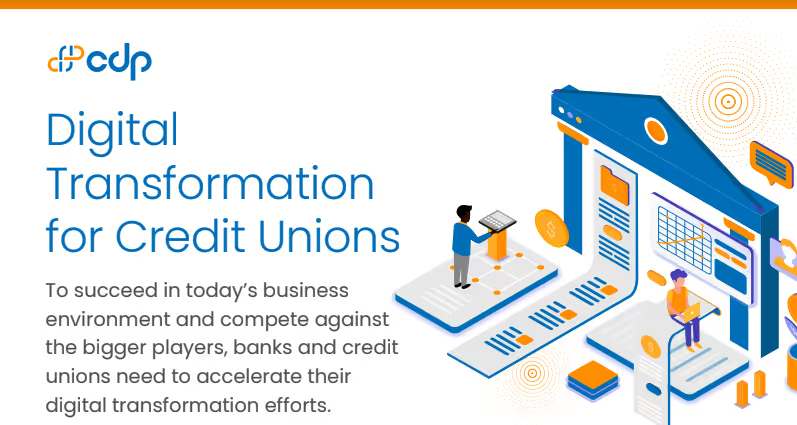
[Infographic] Digital Transformation for Credit Unions
Read More


In today's rapidly evolving technological landscape, the banking industry is undergoing a significant transformation. At the heart of this evolution is the adoption of digitized workflows, which are reshaping how banking teams operate and enhancing their efficiency. As banks navigate the competitive waters of the modern business environment, the implementation of digital workflows is proving to be a game-changer.
Banks are complex organizations with diverse teams working towards various objectives, including operational efficiency, customer satisfaction, regulatory compliance, profit maximization, and risk management. To ensure seamless operations, efficient workflows are essential. Fortunately, advancements in technology are providing banks with the tools they need to optimize their workflows and boost team efficiency.
Digital workflows refer to a series of automated actions where tasks, information, and assignments are passed from one participant to another according to predefined rules. These workflows streamline processes, making them more efficient and effective. In the banking sector, digital workflows encompass a wide range of tasks, from customer onboarding and loan processing to investment tracking and regulatory reporting.
One of the most significant advantages of digital workflows is automation. By automating repetitive and mundane tasks, banks can free up their employees' time, allowing them to focus on more strategic and income-generating activities. Automation not only enhances efficiency but also reduces the risk of human errors, ensuring greater accuracy in banking operations.
Effective communication is crucial for any successful team, and this is especially true in the banking industry. Digital workflows facilitate clear and streamlined communication channels, minimizing the risk of miscommunication or information loss. This improved communication leads to more efficient collaboration among banking teams, ultimately enhancing overall productivity.
Digital workflows eliminate the need for manual data entry, significantly reducing the risk of human errors. Moreover, these workflows provide real-time visibility into banking operations, complete with detailed audit trails. This transparency is essential for effective decision-making and risk management, enabling banks to respond swiftly to changing market conditions.
The true potential of digital workflows in banking lies in their integration across various systems. By ensuring interoperability among different workflow systems, banks can facilitate seamless data exchange and enhance overall efficiency. Integration allows for a holistic approach to workflow management, ensuring that all aspects of banking operations are optimized for maximum productivity.
Digital workflows hold the key to unlocking enhanced team efficiency in the banking sector. They are an integral part of the broader digital transformation strategy that banks must embrace to streamline operations, improve productivity, and deliver value to customers in a rapidly changing digital world. From the front office to the back office, the infusion of digital workflows promises a paradigm shift in how banking teams function, ushering in an era of increased efficiency and productivity.
In conclusion, the banking industry stands at the forefront of a digital transformation that promises unprecedented levels of efficiency and precision. By investing in digitized workflows, banks can enhance team efficiency and gain a competitive advantage in the marketplace. As technology continues to evolve, the adoption of digital workflows will become increasingly essential for banks seeking to thrive in the digital age.
Q: What are digital workflows in banking?
A: Digital workflows in banking refer to automated processes where tasks, information, and assignments are passed between participants according to predefined rules, streamlining operations and enhancing efficiency.
Q: How do digital workflows improve banking efficiency?
A: Digital workflows improve banking efficiency by automating repetitive tasks, streamlining communication, enhancing data accuracy, and providing real-time visibility into operations.
Q: What is the role of integration in digital workflows?
A: Integration ensures interoperability among different workflow systems, facilitating seamless data exchange and optimizing overall banking operations for maximum productivity.
Q: Why is automation important in banking workflows?
A: Automation is crucial in banking workflows as it frees up employees' time, reduces human errors, and allows for a focus on strategic and income-generating activities.
Q: How can banks benefit from adopting digital workflows?
A: Banks can benefit from adopting digital workflows by enhancing team efficiency, improving productivity, and gaining a competitive advantage in the rapidly evolving digital landscape.
.avif)