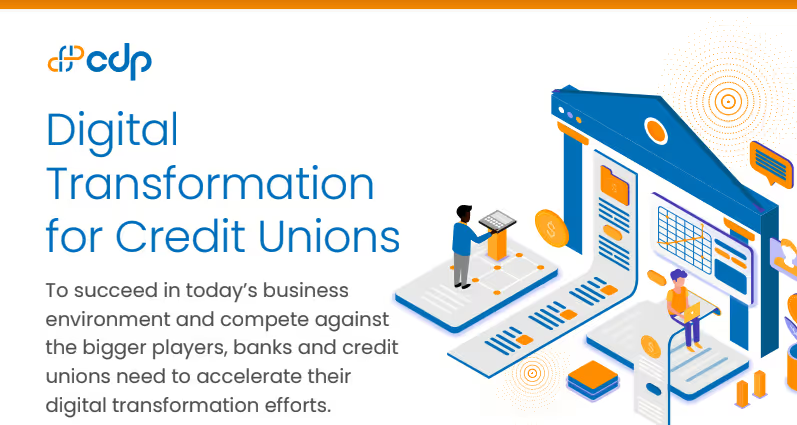
[Infographic] Digital Transformation for Credit Unions
Read More


The wave of digitization has affected almost all sectors of the global ecosystem, and the banking sector is no exception. An increasing number of banking businesses are realizing the benefits and practicality of using eSignatures or electronic signatures. This transformative technology offers multiple advantages, helping businesses enhance operational efficiency, save costs, and stay compliant with regulatory requirements.
Before diving into the core benefits, it's essential to understand what eSignatures are. In essence, they are digital versions of handwritten signatures but offer greater legal validity and security. Introduced to simplify operations in various sectors, including banking, eSignatures have revolutionized the way data is verified and authenticated.
eSignatures have brought about a significant shift in how banking businesses operate. They eliminate the need for physical paperwork, making transactions smoother and quicker. For example, banks can now close loans, get contracts signed, open accounts, and carry out many more functions remotely and more expediently. The convenience and speed enhance client experiences and drive operational efficiency.
Banks deal with a massive volume of documents daily. Managing all this paperwork incurs massive costs, from printing and courier services to storage and management. With eSignatures, banking businesses can dodge these expenses, save valuable resources, and reduce their environmental footprint.
Global and regional regulations for privacy and data protection have made compliance a considerable challenge for banks in recent years. eSignatures come with robust features that ensure data integrity and secure authentication and meet rigid legal standards. For banking businesses, this equates to straightforward audits, reduced legal risks, and stronger trust relationships with clients.
In the realm of banking, ensuring hardcore security of sensitive data is paramount. As opposed to traditional signatures, eSignatures offer advanced security measures. Each signature is encrypted and can be traced back to the signer, mitigating risks of fraud. They also provide an audit trail, capturing every action taken on a document, which adds an extra layer of security for banking executives.
Change is the only constant in the digital era, and banking businesses that don't adapt risk being left behind. eSignatures are no passing fad; they are shaping the future of the banking sector. Their adoption will continue to escalate, given the numerous benefits they offer.
As we head further into the digital future, eSignatures will become even more integral to the banking industry. Their benefits in terms of operational efficiency, cost-saving, compliance, and security have proven indispensable. Above all, they represent a formative step in the direction of creating a more sustainable, customer-friendly, and resilient banking system.
Q: What are eSignatures?
A: eSignatures are digital versions of handwritten signatures that offer greater legal validity and security.
Q: How do eSignatures enhance operational efficiency in banking?
A: They eliminate the need for physical paperwork, making transactions smoother and quicker, thus enhancing client experiences and driving operational efficiency.
Q: What cost savings do eSignatures provide for banks?
A: They help avoid expenses related to printing, courier services, storage, and management of physical documents.
Q: How do eSignatures ensure compliance?
A: eSignatures have robust features that ensure data integrity and secure authentication, meeting rigid legal standards.
Q: Are eSignatures secure?
A: Yes, eSignatures offer advanced security measures, including encryption and audit trails, which mitigate risks of fraud.
.avif)