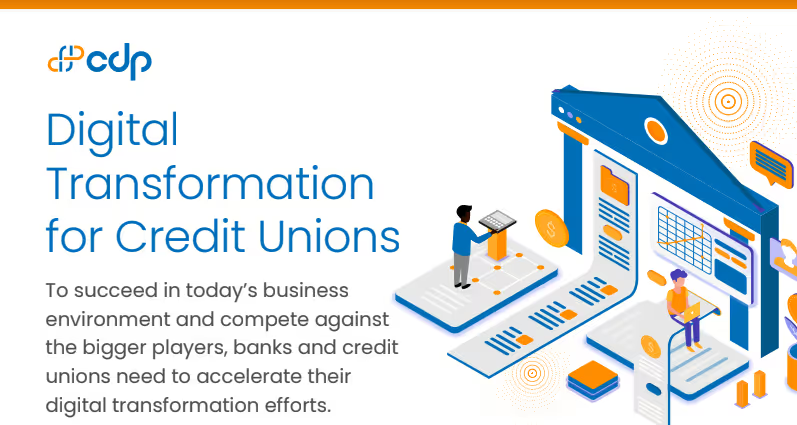
[Infographic] Digital Transformation for Credit Unions
Read More


In the rapidly evolving world of business, the ability to harness and utilize data effectively is becoming a key differentiator for successful companies. At the forefront of this data revolution is the concept of Complete Data Products (CDP), which offer a comprehensive solution for managing and leveraging data across various channels. By integrating CDPs, businesses can streamline their data processes, improve operational efficiency, and ultimately drive growth. This article explores the potential of CDPs to transform business operations and provide a competitive edge.
Complete Data Products are integrated systems designed to collect, organize, and manage large-scale data from multiple sources. These systems orchestrate diverse data types, ranging from customer-specific information to operational insights, into a single platform. By doing so, businesses can capture, process, and analyze data holistically, enabling strategic planning and decision-making based on comprehensive data sets. The centralized nature of CDPs allows for a seamless flow of information, breaking down silos and promoting a more cohesive approach to data management.
1. Holistic Customer Profiles: One of the standout features of CDPs is their ability to gather data from a myriad of sources to create comprehensive customer profiles. These profiles contain vital information on customer behavior, preferences, and their journey across different touchpoints. With this data at their fingertips, businesses can curate personalized strategies that enhance customer retention and boost sales. The ability to understand customers on a deeper level leads to more targeted marketing efforts and improved customer satisfaction.
2. Comprehensive Analysis: CDPs empower companies to conduct thorough analyses of their operational efficiency, market trends, competitive landscape, and overall business performance. By evaluating these aspects in an all-encompassing manner, businesses can identify weaknesses, uncover opportunities, and make informed strategic decisions. The insights gained from comprehensive analysis can drive innovation and foster a culture of continuous improvement.
3. Streamlined Decision-making: Integrating CDPs into business strategies facilitates quick, reliable, and data-driven decision-making. The availability of immediate and relevant information provides organizations with a strategic advantage in the competitive market. By relying on accurate data, businesses can respond swiftly to changing conditions, seize opportunities, and mitigate risks effectively.
4. Improved Operational Efficiency: CDPs automate the data collection and analysis processes, significantly reducing the time and resources required in these areas. The automated nature of CDPs not only enhances accuracy but also allows the workforce to focus on strategic and core operations. By eliminating manual data handling, businesses can allocate their resources more efficiently and drive productivity gains.
Several businesses have already embraced the power of CDPs to enhance their operations. For instance, Starbucks has leveraged complete data products to gather and analyze customer preferences, leading to more personalized marketing campaigns and increased customer engagement. By utilizing CDPs, Starbucks has been able to tailor its offerings to meet the unique needs of its customers, resulting in higher customer satisfaction and loyalty.
Similarly, companies in the e-commerce sector have witnessed significant improvements in click-through rates and conversions by integrating CDPs into their marketing strategies. By understanding customer behavior and preferences, these companies can deliver targeted messages and offers, driving higher engagement and sales.
The role of Complete Data Products in improving business operations is undeniable. As businesses increasingly adopt data-driven models, integrating CDPs into their strategies will become a necessity for sustained and scalable growth. The future of business relies heavily on how effectively organizations can utilize data to their advantage. By investing in comprehensive data solutions like CDPs, businesses can stay ahead in the ever-evolving competitive landscape.
To fully harness the potential of CDPs, businesses should focus on training their teams to effectively utilize these tools and continuously explore innovative ways to leverage data. As the business landscape continues to evolve, the ability to adapt and embrace new technologies will be crucial for success. By integrating Complete Data Products into their operations, businesses can position themselves as leaders in their industries and drive meaningful growth.
What are Complete Data Products (CDP)?
Complete Data Products are integrated systems designed to collect, organize, and manage large-scale data from multiple sources, enabling businesses to streamline data processes and enhance decision-making.
How can CDPs improve customer engagement?
CDPs create holistic customer profiles by gathering data from various sources, allowing businesses to understand customer behavior and preferences. This enables personalized strategies that enhance customer engagement and satisfaction.
What industries can benefit from CDPs?
CDPs can benefit businesses across various industries, including retail, e-commerce, healthcare, and more. Any industry that relies on data-driven decision-making can leverage CDPs to improve operations and drive growth.
Are CDPs suitable for small businesses?
Yes, CDPs can be tailored to suit the needs of small businesses. By streamlining data processes and providing valuable insights, CDPs can help small businesses compete more effectively in the market.
What is the future of CDPs in business?
As businesses continue to adopt data-driven models, the integration of CDPs will become increasingly important. CDPs will play a crucial role in enabling businesses to make informed decisions and drive growth in the future.
.avif)