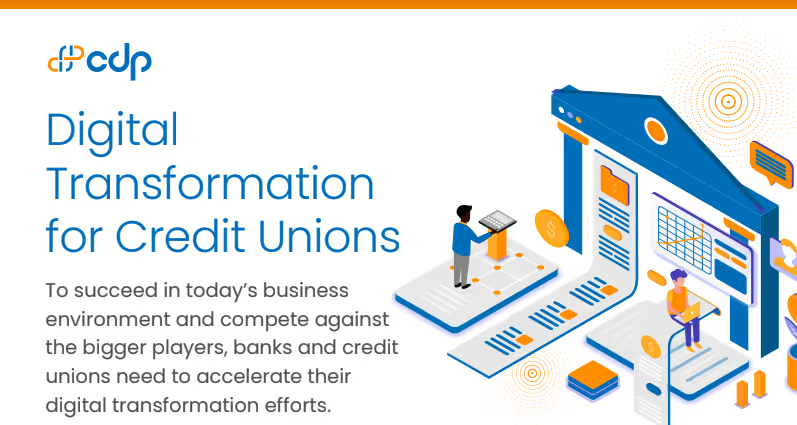
[Infographic] Digital Transformation for Credit Unions
Read More


In today's fast-paced digital world, organizations are constantly seeking innovative ways to streamline their operations and enhance user experiences. One area that has seen significant transformation is member onboarding, where digital tools like webforms have become game-changers. By simplifying and enhancing the member onboarding process, webforms offer organizations a strategic advantage in managing memberships efficiently and effectively.
The traditional methods of onboarding, which involved lengthy paperwork and manual data entry, are quickly becoming obsolete. With the advent of webforms, organizations can now offer a seamless, paperless, and efficient onboarding experience that not only saves time and resources but also improves member satisfaction. This article explores the various ways webforms are revolutionizing member onboarding and the benefits they bring to organizations.
Webforms have emerged as a central component in the digital onboarding process, providing a user-friendly and efficient means for new members to register and update their information. By automating data collection, webforms eliminate the need for manual processing, reducing the possibility of human error and ensuring that all necessary information is captured accurately.
The ability to customize webforms to include specific fields tailored to the organization's needs further enhances their effectiveness. This customization ensures that the onboarding process is systematic and hassle-free, saving both time and resources. Members can easily fill out webforms at their convenience, making the process more accessible and efficient.
One of the key advantages of using webforms in the onboarding process is their ability to streamline data collection and member management. By automating these tasks, organizations can quickly gather and process information at scale, allowing for more efficient member management. This automation not only speeds up the onboarding process but also reduces the administrative burden on staff, freeing them to focus on more strategic tasks.
Webforms also provide a consistent and standardized approach to data collection, ensuring that all necessary information is captured accurately. This consistency reduces the likelihood of errors and ensures that the onboarding process is smooth and efficient. As a result, organizations can onboard new members more quickly and with greater accuracy, enhancing the overall member experience.
The adaptability and flexibility of webforms allow organizations to significantly improve the user experience. By incorporating customized fields, brand design, and personalized messages, webforms become more interactive and relatable to users. This personalization helps build confidence and trust in the organization, making new members feel valued and appreciated from the outset.
Personalized webforms also enhance the user experience by providing a more engaging and intuitive interface. By making the onboarding process more interactive and user-friendly, organizations can improve member satisfaction and retention. This enhanced user experience is a key factor in attracting and retaining members, contributing to the organization's growth and success.
Webforms offer seamless integration with other digital tools such as email marketing software and CRM platforms. This integration ensures data synchronization across all platforms, automatically updating user details and triggering actions such as sending a welcome email once the form is completed. This feature establishes a paperless and efficient channel for member initiation and subsequent communication.
By integrating webforms with existing systems, organizations can create a more cohesive and efficient onboarding process. This integration not only streamlines data management but also enhances communication and engagement with new members. As a result, organizations can build stronger relationships with their members and improve overall satisfaction.
Managing data is only one part of the equation; the real power lies in interpreting this data to further refine the onboarding process. Webforms provide valuable analysis from the data they capture, offering insights into user behaviors and preferences. These insights can help organizations tailor their services to meet the specific needs and expectations of their members.
By analyzing data collected through webforms, organizations can identify trends and patterns that can inform strategic decisions. This data-driven approach allows organizations to continuously improve their onboarding process, enhancing member satisfaction and driving organizational growth. The ability to leverage data insights is a key advantage of using webforms in the onboarding process.
Webforms represent a significant shift from traditional member onboarding processes to a more streamlined, efficient, and user-friendly system. As more organizations adopt these digital tools, the onboarding process will become seamless, beneficial, and convenient, contributing significantly to organizational growth and membership satisfaction.
By embracing webforms, organizations can enhance their member onboarding process, improve user experience, and gain valuable insights into member behaviors and preferences. This transformation not only benefits the organization but also enhances the overall member experience, leading to increased satisfaction and retention. As digital tools continue to evolve, organizations that leverage webforms will be well-positioned to succeed in the competitive landscape.
What are webforms, and how do they benefit the onboarding process?
Webforms are digital forms used to collect and process information during the onboarding process. They benefit the onboarding process by automating data collection, reducing human error, and providing a streamlined, user-friendly experience for new members.
How do webforms improve user experience during onboarding?
Webforms improve user experience by offering a more interactive and personalized interface. By incorporating customized fields, brand design, and personalized messages, webforms make the onboarding process more engaging and intuitive, enhancing member satisfaction.
Can webforms integrate with existing systems?
Yes, webforms can seamlessly integrate with other digital tools such as email marketing software and CRM platforms. This integration ensures data synchronization and automates actions like sending welcome emails, creating a cohesive and efficient onboarding process.
What insights can organizations gain from webform data?
Organizations can gain valuable insights into user behaviors and preferences by analyzing data collected through webforms. These insights can inform strategic decisions and help tailor services to meet the specific needs and expectations of members.
Why should organizations adopt webforms for member onboarding?
Organizations should adopt webforms for member onboarding because they offer a streamlined, efficient, and user-friendly process. By automating data collection and integrating with existing systems, webforms enhance member satisfaction and contribute to organizational growth.
.avif)