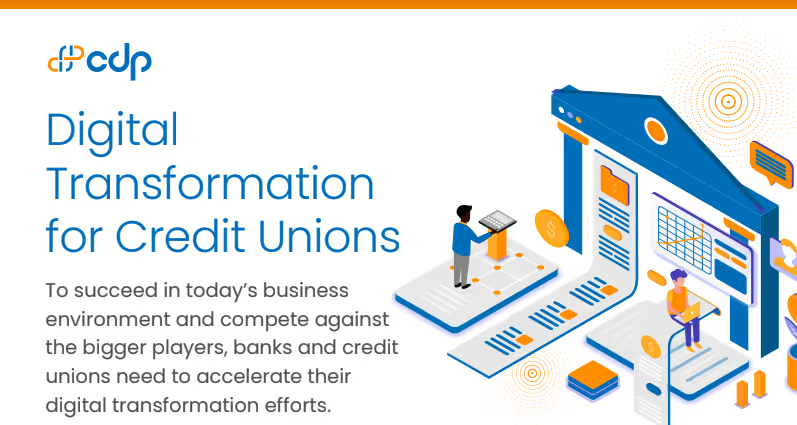
[Infographic] Digital Transformation for Credit Unions
Read More


The banking industry is undergoing a significant transformation as it shifts from traditional in-person branches to digital platforms. This transition has been largely driven by the need for more efficient, secure, and user-friendly solutions that cater to the evolving demands of customers. At the heart of this transformation lies a powerful yet often overlooked tool: Webforms. These digital forms have become essential in streamlining remote banking operations, offering numerous benefits such as enhanced data management, improved security, and increased automation.
One of the primary advantages of Webforms is their ability to handle complex data sets with ease. In the banking sector, managing and analyzing large volumes of data is crucial for making informed decisions and providing personalized services to customers. Webforms simplify this process by digitalizing data entry, allowing banks to efficiently collect, store, and retrieve customer information in a structured format. This not only reduces human errors but also enables financial institutions to focus on analyzing data to predict market trends and improve customer experiences.
In today's digital age, security is a top priority for banks and their customers. Webforms play a vital role in safeguarding sensitive information by incorporating advanced encryption technologies. This ensures that customer data remains protected from cyber threats, providing peace of mind to both banks and their clients. As remote banking continues to grow, the importance of secure data handling cannot be overstated, making Webforms an indispensable asset in maintaining trust and credibility in the industry.
Another significant benefit of Webforms is their ability to support automation in remote banking operations. By automating tasks such as information gathering, updates, feedback collection, and error elimination, Webforms help banks streamline their processes and reduce manual labor. This not only improves operational efficiency but also allows banks to allocate resources more effectively, ultimately enhancing customer satisfaction and driving business growth.
Webforms offer a high degree of customization, allowing banks to tailor them to their specific operational requirements. Whether it's updating customer information, processing loan applications, or capturing feedback, Webforms can be custom-built to suit various needs, thereby improving operational efficiency. Furthermore, Webforms seamlessly integrate with existing banking software and tools, enhancing the overall digital banking ecosystem without creating isolated systems.
In addition to their operational benefits, Webforms also contribute to environmental conservation by reducing the need for paper. As banks increasingly adopt digital solutions, the reliance on paper-based processes diminishes, leading to a more eco-friendly banking industry. This not only aligns with global sustainability goals but also helps banks reduce costs associated with paper usage and storage.
The rise of remote banking and the growing reliance on Webforms are inextricably linked. By addressing critical needs such as data management, security, automation, and environmental conservation, Webforms have revolutionized digital banking operations. As the banking industry continues to evolve in the digital era, the potential of Webforms is immense, and their role is only set to expand. For banks looking to stay ahead in this competitive landscape, embracing Webforms as a core component of their digital strategy is essential.
Q: What are Webforms?
A: Webforms are digital forms used to collect and manage data in a structured format, commonly used in remote banking operations.
Q: How do Webforms enhance security in remote banking?
A: Webforms incorporate advanced encryption technologies to protect sensitive customer data from cyber threats, ensuring secure transactions.
Q: Can Webforms be customized for specific banking needs?
A: Yes, Webforms can be tailored to suit various operational requirements, such as updating customer information or processing loan applications.
Q: How do Webforms contribute to environmental conservation?
A: By reducing the reliance on paper-based processes, Webforms help banks minimize their environmental impact and align with sustainability goals.
.avif)