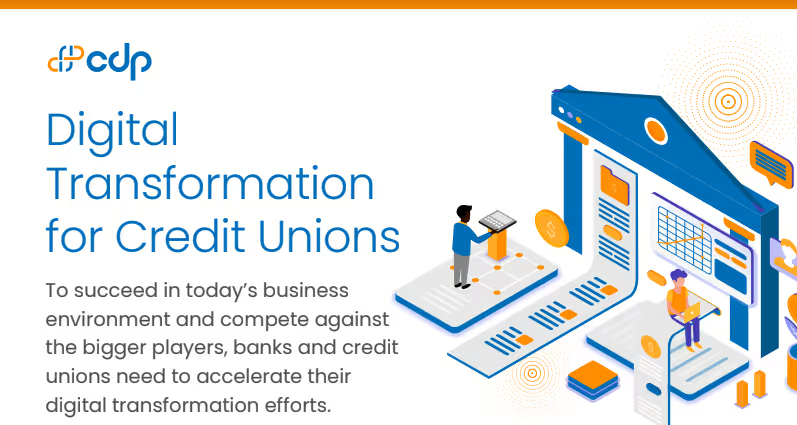
[Infographic] Digital Transformation for Credit Unions
Read More

In today’s fast-paced digital landscape, businesses are increasingly turning to technology to keep up with the demands of modern operations. Traditional manual processes, especially in document management, are not only time-consuming but also prone to errors. This is where digital signing tools like Laserfiche come into play, offering a solution that combines speed, accuracy, and security. The transition to digital signing is not just a trend but a necessity for businesses aiming to stay competitive and efficient.
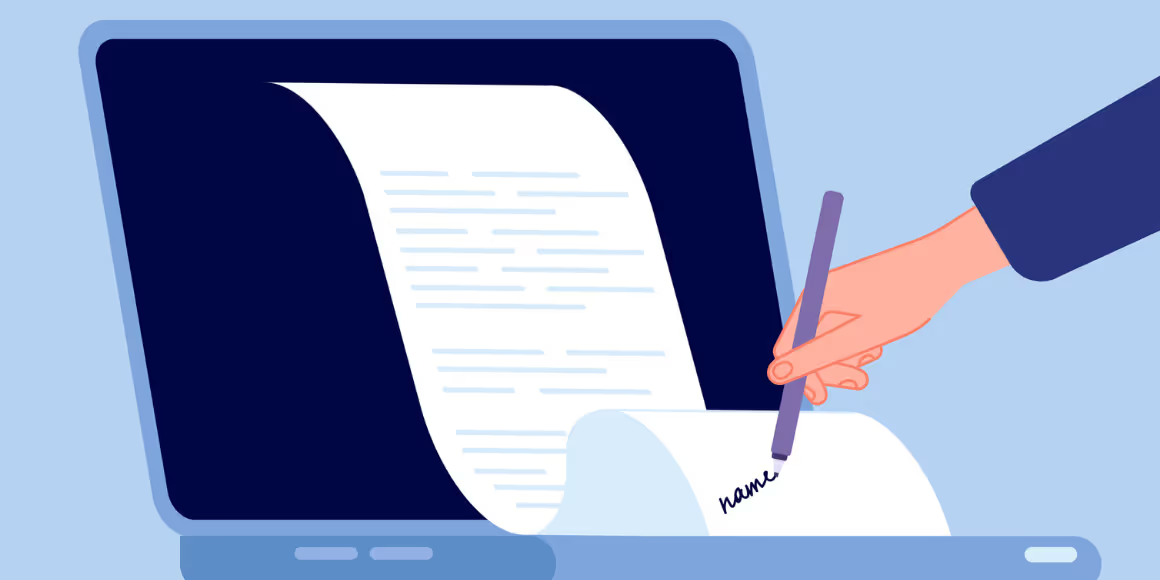
Digital signing tools are designed to automate the cumbersome process of preparing and signing documents. By digitizing these tasks, businesses can significantly reduce the time spent on manual operations. For instance, with Laserfiche, documents can be signed electronically, eliminating the need for printing, signing, scanning, and mailing. This automation not only saves time but also reduces the risk of human errors such as forgetting to sign or misplacing important documents.
Laserfiche stands out as a robust digital signing tool that has revolutionized document management across various industries, including education, government, healthcare, and financial services. Its user-friendly interface allows for easy electronic signing, making documents legally binding without the hassle of physical paperwork. Moreover, Laserfiche’s advanced technology ensures that signatures are tamper-evident and the signer’s identity is automatically verified, thereby preventing fraudulent activities.
One of the primary concerns with digital documents is security. Laserfiche addresses this by offering unique encryption technology that ensures signatures are tamper-proof. This not only protects the integrity of the document but also builds trust among all parties involved. Additionally, Laserfiche provides an audit trail for every action taken on a document, making it easier to track compliance and accountability. This feature is particularly beneficial for industries dealing with sensitive and legal documents, as it significantly reduces the chances of mismanagement and forgeries.
In today’s globalized world, the ability to collaborate remotely is crucial. Laserfiche’s cloud-based document management system allows for remote access, enabling multiple individuals from different locations to sign the same document without delays. This feature not only enhances collaboration but also ensures that business operations continue smoothly, regardless of geographical barriers. The seamless integration of digital signatures into workflows helps businesses maintain efficiency and productivity, even in a remote work setting.
Integrating a digital signing tool like Laserfiche into your document management process offers numerous benefits. From reducing manual errors and speeding up operations to enhancing security and trust, Laserfiche provides a comprehensive solution for businesses looking to optimize their workflow. As the future of business operations leans more towards digital solutions, adopting technologies like Laserfiche is not just advantageous but essential for gaining a competitive edge. By embracing digital signatures, businesses can boost their efficiency, increase accuracy, and create a more secure environment for handling documents.
Q: What industries can benefit from using Laserfiche?
A: Laserfiche is beneficial for various industries, including education, government, healthcare, and financial services, among others.
Q: How does Laserfiche ensure the security of digital signatures?
A: Laserfiche uses unique encryption technology to make signatures tamper-evident and automatically verifies the signer's identity to prevent fraud.
Q: Can Laserfiche be used for remote collaboration?
A: Yes, Laserfiche’s cloud-based system allows for remote access, enabling seamless collaboration among multiple users from different locations.
Q: What are the benefits of using digital signing tools like Laserfiche?
A: Digital signing tools like Laserfiche reduce manual errors, speed up document processing, enhance security, and improve collaboration and accessibility.
.avif)