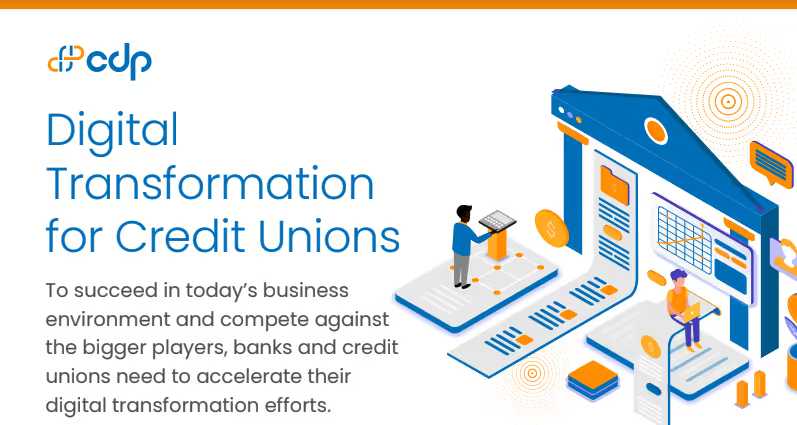
[Infographic] Digital Transformation for Credit Unions
Read More


In the intricate world of finance, the loan application process has long been a daunting hurdle for many. The complexities involved often lead to incomplete applications, causing frustration for both applicants and lenders. However, with the advent of digital solutions, a promising change is on the horizon. Enter webforms—a revolutionary tool that is simplifying the loan application process, making it more accessible and efficient for everyone involved.
Traditional loan applications have been synonymous with cumbersome paperwork and time-consuming procedures. Applicants often find themselves overwhelmed by the multitude of documents and requirements, leading to a high rate of abandoned applications. This not only frustrates potential borrowers but also creates inefficiencies for lending institutions. The need for a streamlined, user-friendly solution was evident, and webforms have emerged as the answer.
Webforms have transformed various industries by providing a simple, customizable, and efficient method for data collection. In the realm of loan applications, they are proving to be game-changers. By replacing traditional paperwork with digital forms, webforms offer a user-friendly interface that guides applicants through the process with ease. This simplicity ensures that applications are completed accurately and promptly, reducing the likelihood of errors and delays.
One of the standout features of webforms is their customizable nature. Different lending institutions have varying requirements for loan applications, and webforms can be tailored to meet these specific needs. This means that applicants only need to provide relevant information, saving them from sifting through unnecessary data. Additionally, webforms can be adapted to suit various types of loans, whether it's a mortgage, personal loan, auto loan, or small business loan. This versatility makes the application process seamless and efficient for all parties involved.
Webforms not only benefit applicants but also offer significant advantages to lending institutions. The digital format of webforms allows for organized data storage, making it easy for lenders to access and review applications. This streamlined process expedites loan approvals, reducing the time and effort required compared to traditional paperwork. Moreover, the accuracy of data collected through webforms minimizes the risk of errors, ensuring a smoother experience for both lenders and borrowers.
The introduction of webforms in the loan application process represents a win-win situation for both borrowers and lenders. By simplifying and personalizing the application process, webforms enhance the overall experience for applicants, making loans more accessible than ever before. For lending institutions, the efficient and accurate data collection facilitated by webforms sets the stage for a streamlined, 21st-century approach to loan applications. As the financial landscape continues to evolve, embracing digital solutions like webforms will be crucial in staying ahead of the curve.
Q: What are webforms, and how do they work in loan applications?
A: Webforms are digital forms used for data collection. In loan applications, they guide users through the process, replacing traditional paperwork with a user-friendly interface that ensures accurate and efficient data submission.
Q: Can webforms be customized for different types of loans?
A: Yes, webforms are highly customizable and can be tailored to suit various types of loans, such as mortgages, personal loans, auto loans, and small business loans, ensuring that applicants only provide relevant information.
Q: How do webforms benefit lending institutions?
A: Webforms offer organized data storage, making it easy for lenders to access and review applications. This expedites loan approvals and reduces the likelihood of errors, enhancing efficiency for lending institutions.
Q: Are webforms secure for submitting personal and financial information?
A: Yes, reputable webforms are designed with security measures to protect sensitive information, ensuring that personal and financial data is kept safe during the application process.
.avif)