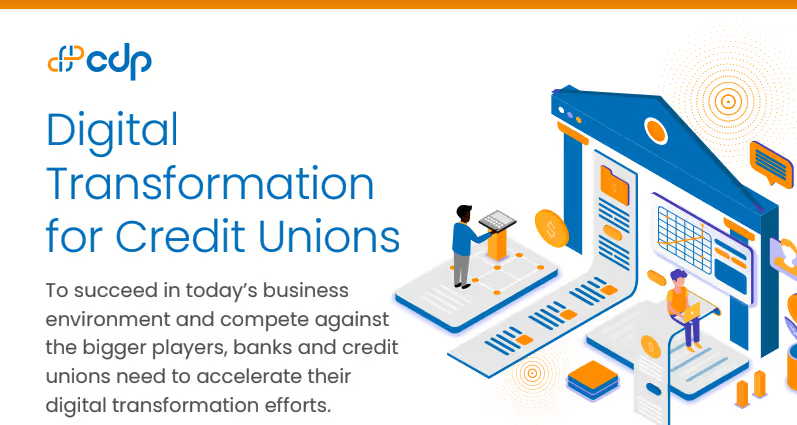
[Infographic] Digital Transformation for Credit Unions
Read More


The advent of digital technology has reshaped the global banking landscape, with innovative solutions influencing operations and customer experiences in unprecedented ways. One such development is the introduction of digital loan balancing software, an innovation proving to be an essential aspect of modern banking practices. Providing automation, accuracy, efficiency, and a unique edge in a constantly evolving market, digital loan balancing software is playing a crucial role in the digital revolution that is overhauling banking institutions worldwide.
The future of banking is digital. Operational strategies have adapted significantly to incorporate a diverse array of digital technologies such as mobile apps, digital payment systems, digital marketing, and now, digital loan balancing software. These tools are transforming traditional banking activities such as processing loan applications, account opening, money transfer, loan disbursements and payments – making them faster, smoother, and more accommodating to the needs of the modern customer.
Digital loan balancing software revolutionizes loan management by automating the calculation of payments, tracking repayments, and managing accounts in real-time. Such software provides continuous updates on the loan balance status -- making banking operations more efficient and error-free. It adds a layer of convenience and confidence to both the bank and the customer, allowing customers to monitor their loan repayments, and bankers to track loan statuses accurately and promptly.
The use of digital loan balancing software reduces the likelihood of loan repayment errors. As banking institutions can track loan updates accurately and in real-time, they can avoid costly errors and delays associated with manual data entry and calculations. This reduction in errors, in turn, contributes to enhanced customer satisfaction.
Federal regulations mandate that bank customers be informed about their loan status at every phase. With digital loan balancing software, customers receive timely and accurate updates, significantly enhancing their banking experiences. This transparency builds trust and credibility between the bank and the customer, promoting customer loyalty and retention.
The latest advancement in digital loan balancing software is the incorporation of artificial intelligence (AI). AI boosts the capabilities of the software, aiding in effective data analysis, risk assessment, fraud detection, and personalized customer service. By leveraging the predictive capabilities of AI, banks can identify potential defaulters and take appropriate preventive measures.
The move toward increased digitization is gaining momentum in the banking sector. Among many other technological innovations, digital loan balancing software stands out as a key driver of operational efficiency and customer satisfaction. By harnessing such technologies, banks not only streamline their operations but also provide an enhanced customer-centric banking experience, setting the stage for a revolutionary change in the world of banking.
What is digital loan balancing software?
Digital loan balancing software automates the management of loan payments, tracks repayments, and manages accounts in real-time, enhancing the efficiency and accuracy of banking operations.
How does digital loan balancing software improve customer engagement?
It provides timely and accurate updates on loan statuses, enhancing transparency and trust between banks and customers, which promotes loyalty and retention.
What role does AI play in digital loan balancing software?
AI enhances the software's capabilities by aiding in data analysis, risk assessment, fraud detection, and personalized customer service, allowing banks to identify potential defaulters and take preventive measures.
Why is digital loan balancing software important for banks?
It reduces errors, enhances operational efficiency, and improves customer satisfaction, helping banks streamline their operations and provide better service.
.avif)